

Cart
0
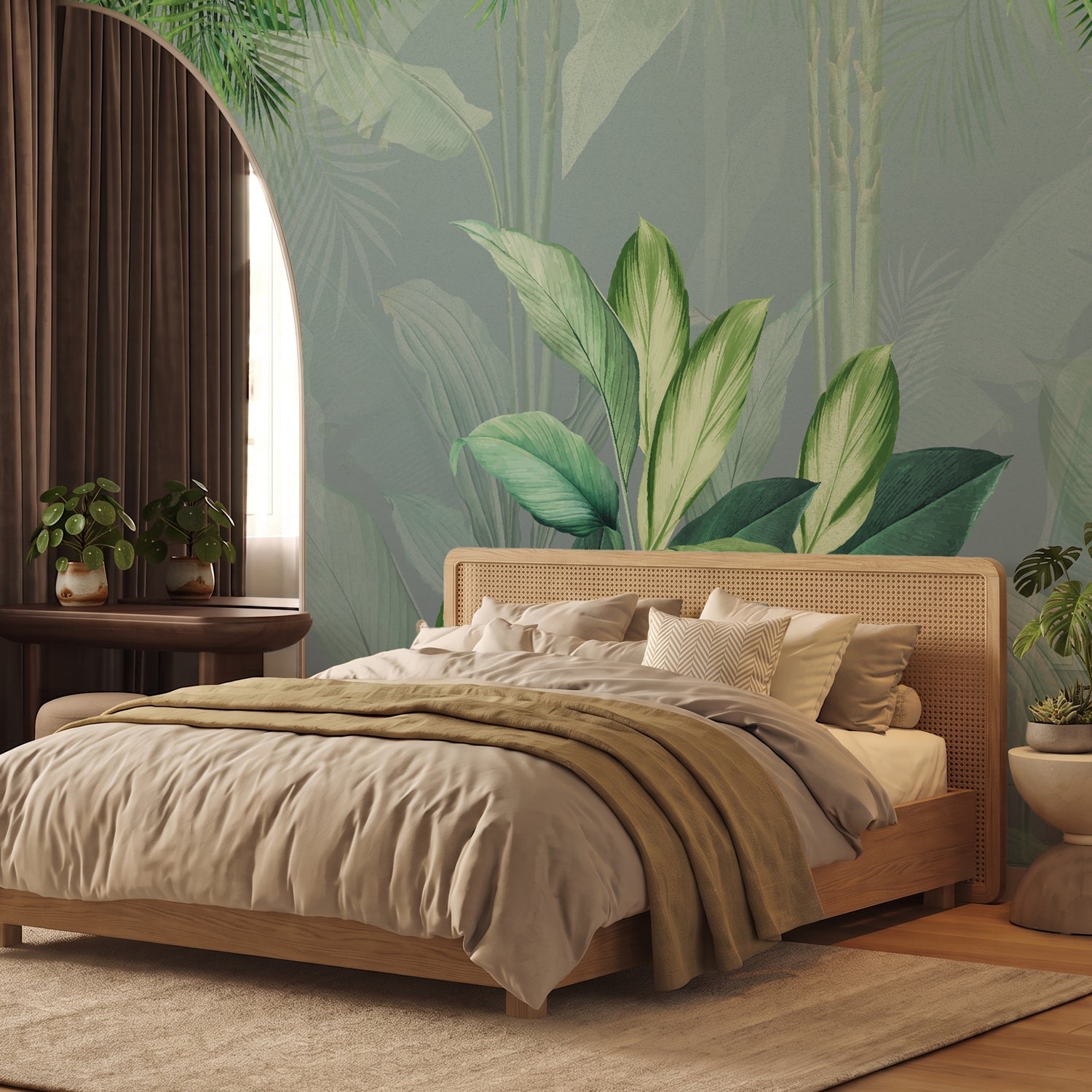
There's a particular kind of tired that comes from a bedroom that just... doesn't feel like anything. White walls, maybe a poster, whatever curtains came with the flat. It's not ugly, exactly. It's just blank. And after a while, blank starts to feel a bit like living in a waiting room.
Wallpaper is the fastest fix for that, and honestly, it's the one I'd recommend before almost anything else if you're redoing a bedroom on a budget. New bedding helps. A better lamp helps. But nothing changes the actual feel of a room the way a patterned wall does.
Why not just paint?
Paint is fine. Paint is safe. But paint can only give you a color — it can't give you a pattern, a texture, or a bit of a story on the wall. If you've ever walked into a room with a good wallpapered wall, you'll know what I mean. It has depth. It looks considered, like someone actually thought about the room instead of just picking "greige" from a hardware store chart.
And the myth that wallpaper is a hassle to put up or a nightmare to take down is mostly outdated. Most of what's available now — especially the printed, made-to-size kind — goes up cleanly and comes off without wrecking your wall if you change your mind in a couple of years.
You don't need to wallpaper the whole room
This is the bit people get wrong. You don't need four walls of pattern. One wall — usually the one behind your bed — is enough to completely change the room. It gives your eye somewhere to land, it makes the headboard feel intentional instead of just "a bed against a wall," and it means you're not committing to a huge amount of pattern in a space you also need to relax in.
If you do want more coverage, go for something smaller-scale and quieter, and let it wrap around two walls rather than shouting from all four.
What kind of pattern actually suits a bedroom
A living room can handle something loud. A bedroom, less so — you're trying to sleep in there. A few directions that tend to work:
Floral patterns are the safest bet if you're not sure what you want. They're warm without being overpowering, and they age well — a good floral wallpaper doesn't look dated the way a lot of "trendy" patterns do five years later.
If your taste runs more contemporary, look at abstract or geometric prints. Clean lines, a couple of tones, nothing fussy. These work especially well if the rest of your furniture is fairly plain and modern.
Textured or 3D-look wallpaper is worth considering for the headboard wall specifically — it catches the light differently through the day and gives the room a bit of quiet luxury without you having to do anything else.
And if you like colour that has some history behind it — Pichwai art, Chinoiserie, traditional Indian motifs — a bedroom is actually a great place to use it, because you're not trying to impress guests, you're making something for yourself.
Match it to who's actually sleeping there
A master bedroom can take something a bit bolder — deeper colours, richer patterns, whatever feels like "you" rather than a showroom. A kid's room wants softer, gentler designs, ideally something that won't feel babyish in three years. A guest room is the one place I'd say play it safer — warm, neutral, welcoming, because you're decorating for other people's taste, not just your own.
A few things worth checking before you buy
Look at the swatch in your actual room, not just on a screen — colours shift a lot under warm bulbs versus daylight, and a wallpaper that looks perfect on your laptop can read completely differently on the wall at 9pm.
Smaller rooms generally do better with lighter colours and smaller print scale — a huge bold pattern in a tiny room can close it in rather than open it up. Bigger rooms can take more drama.
And get your measurements right, or better, go with a custom size. A wallpaper that's slightly off on a wall looks worse than no wallpaper at all.
Where to look
Jumig has somewhere north of 300 bedroom wallpaper designs — florals, modern and geometric prints, Indian and Pichwai-inspired art, pastels, the lot — and everything can be made to custom size and colour so it actually fits your wall properly instead of you fitting your wall around a standard roll.
Have a look through the bedroom wallpaper collection and see what pulls you in. You'll probably know within about ten seconds which direction feels right.
Frequently Asked Questions (FAQ)
Is it a pain to put up, or to take down later if I get sick of it?
Honestly, no. The printed and peel-and-stick options you get now aren't the same as the stiff, glue-heavy rolls your parents might've dealt with. Most people manage an accent wall themselves over a weekend, and it peels off without tearing up the wall underneath if you fancy a change in a year or two.
Do all four walls need to be covered, or is that overkill?
That's overkill, most of the time. One wall does the job — behind the bed is the obvious choice — and it's enough to make the whole room feel different when you walk in. If you want to go further, that's fine too, just pick something quieter and smaller in scale so it doesn't fight with itself.
My room's on the small side — will a bold pattern just make it feel smaller?
Usually, yes. Small rooms tend to look better in lighter tones with a smaller repeat pattern. Big, dramatic prints can work, but they're better suited to a room with a bit more space to breathe.
Can I get something sized for my exact wall instead of a standard roll?
Yep, custom sizing is an option, and it's worth doing — an ill-fitting wallpaper job is more noticeable, and more annoying, than no wallpaper at all.
What works for a main bedroom versus a kid's room?
A main bedroom can carry more colour and a bolder pattern — it's your space, so go with what actually feels like you. A kid's room is better off softer and a bit more neutral in mood, mainly so it doesn't look too young for them in a couple of years. Guest rooms are the one spot I'd keep safe — warm, welcoming, nothing too personal.
How do I avoid picking a colour that looks totally different once it's on the wall? Get an actual swatch into the room and check it at a few different times of day. Screens and daylight are kind to almost everything — it's your bedside lamp at 9pm that tells the truth.

